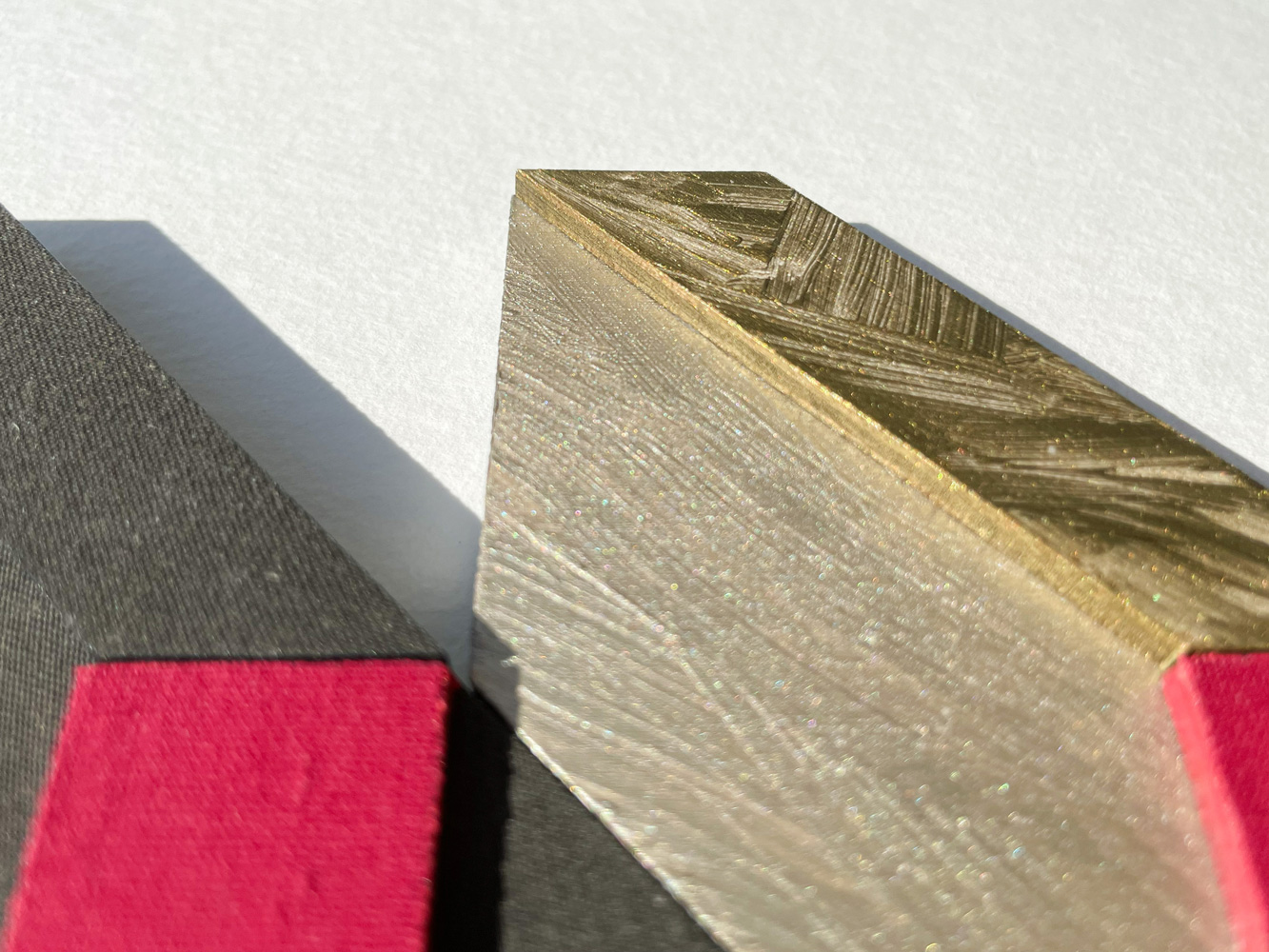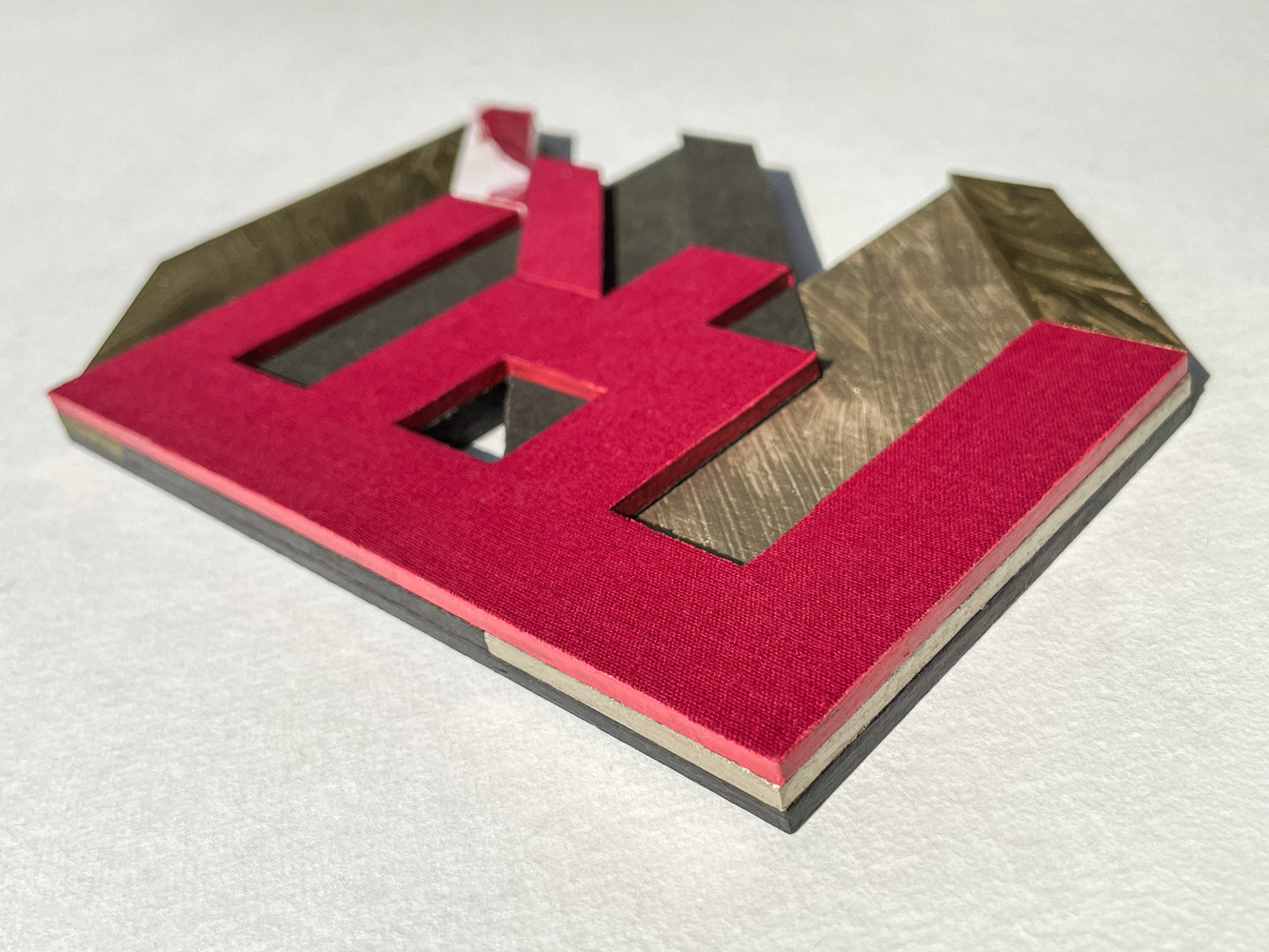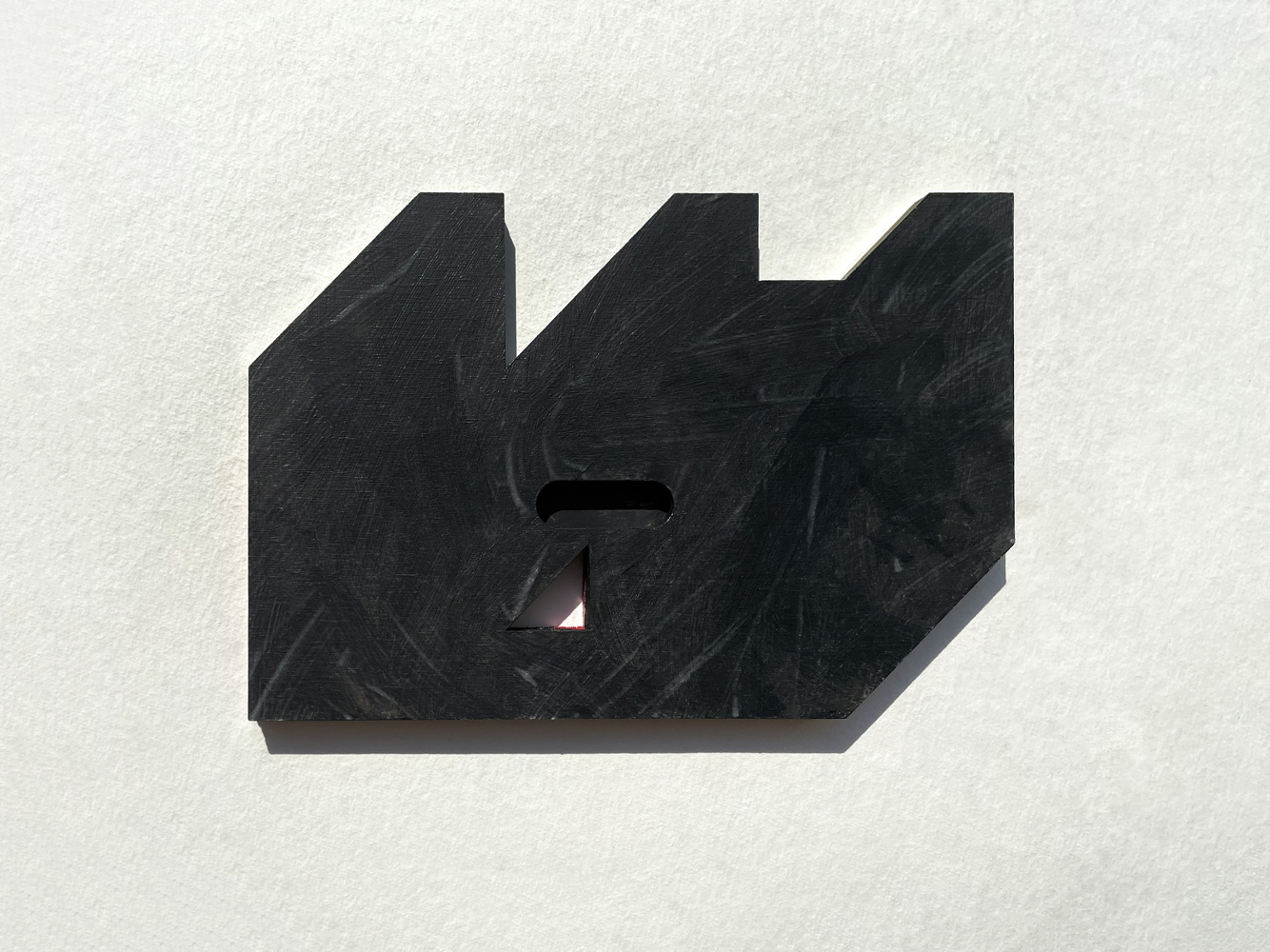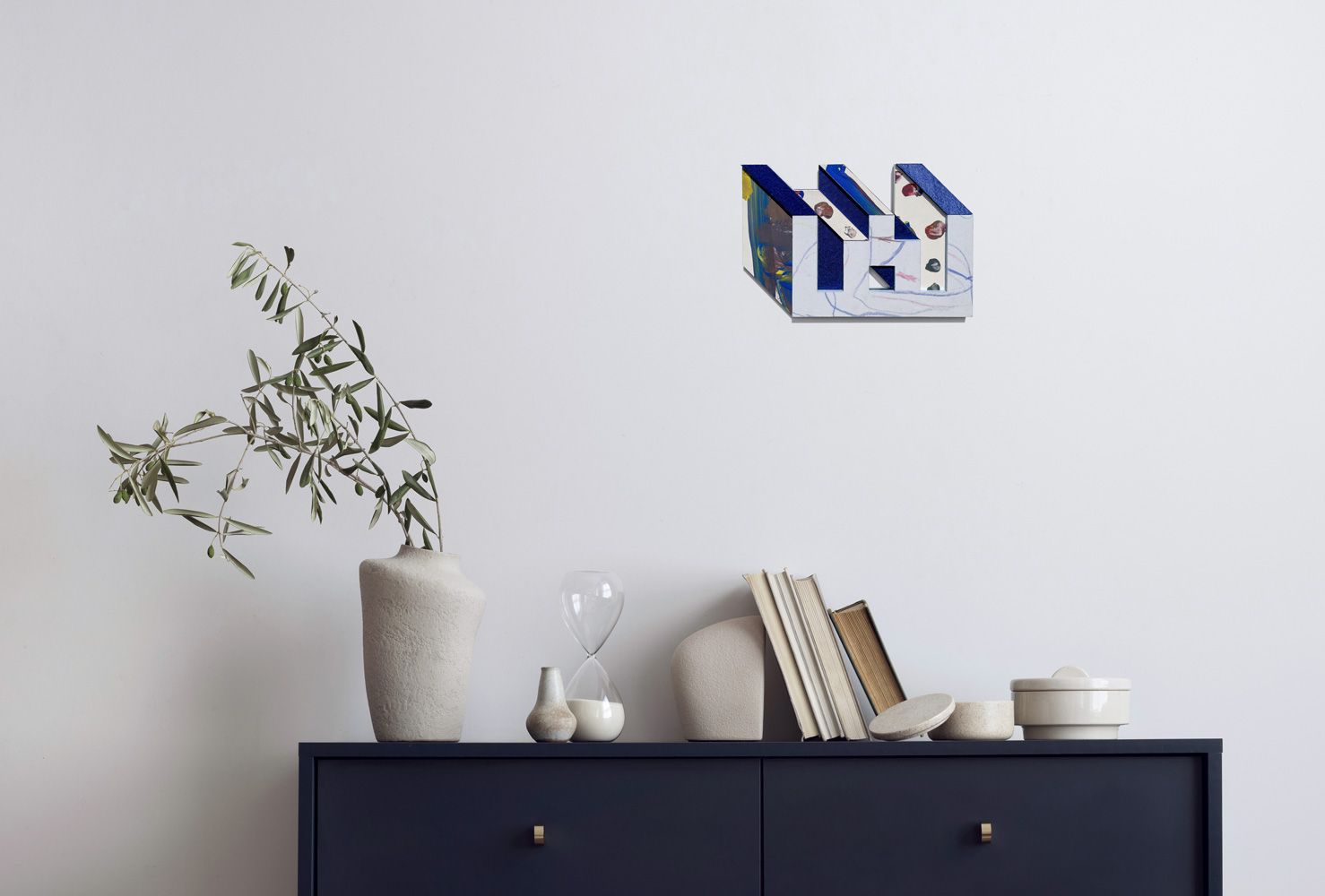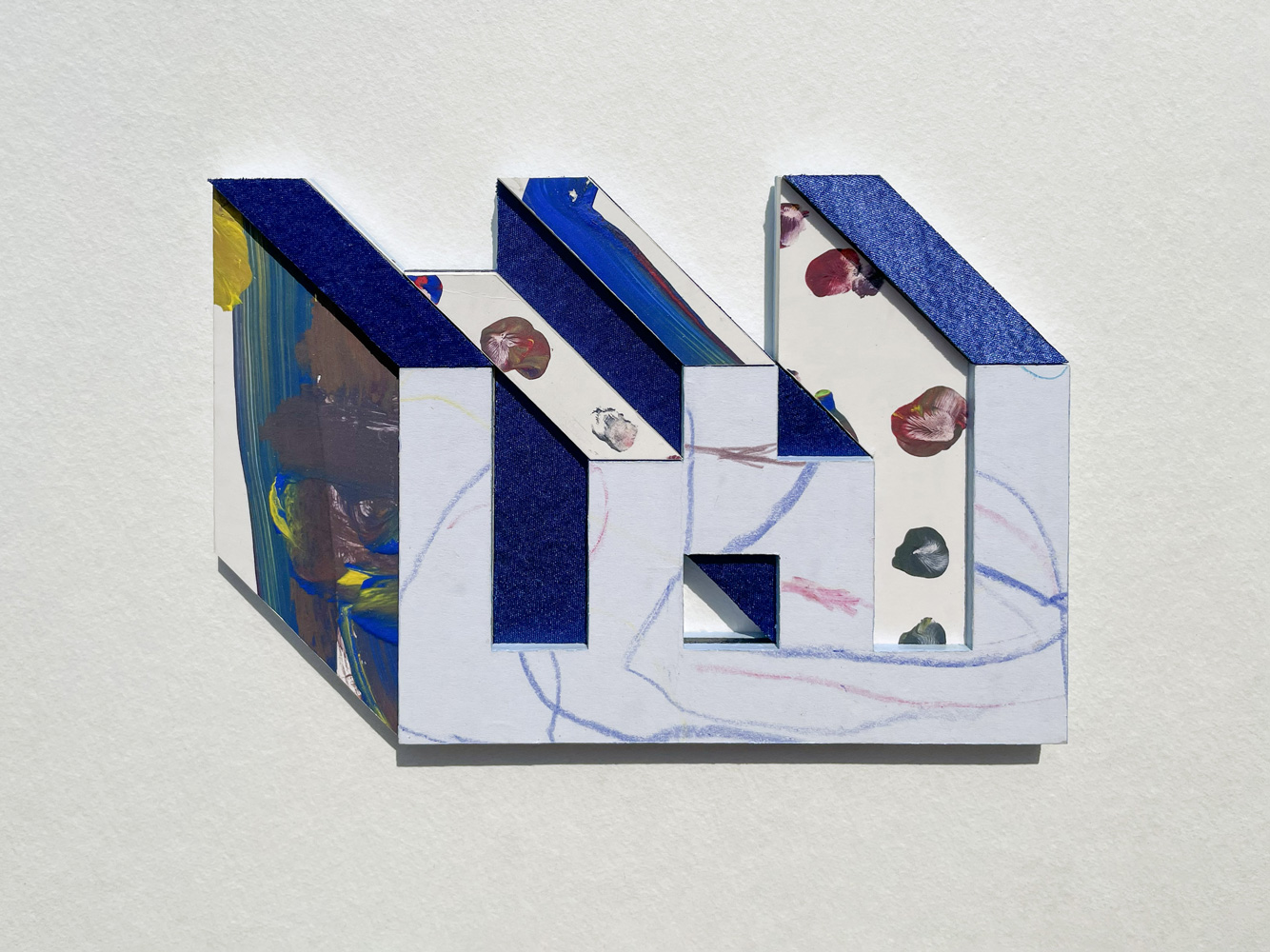
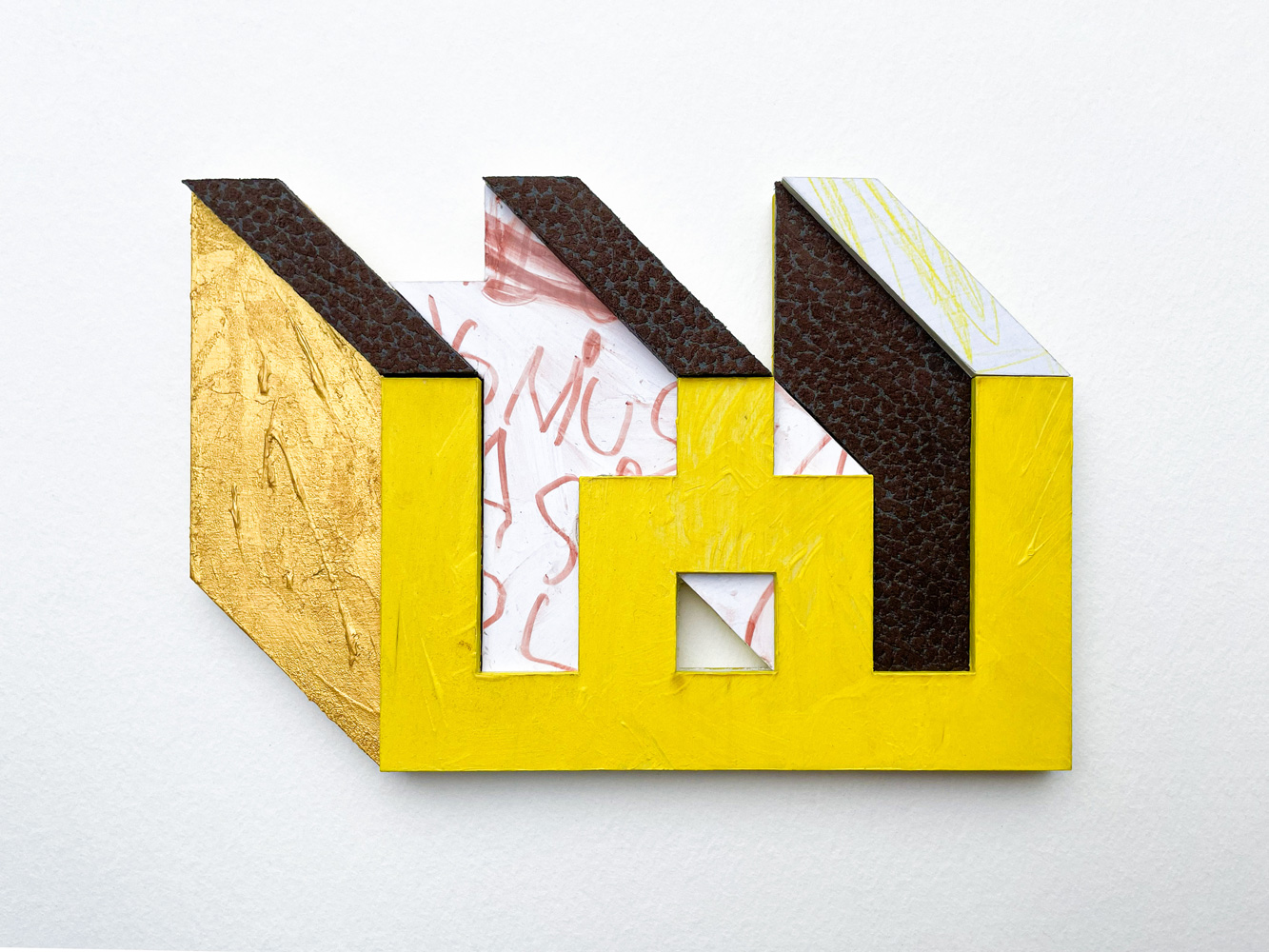
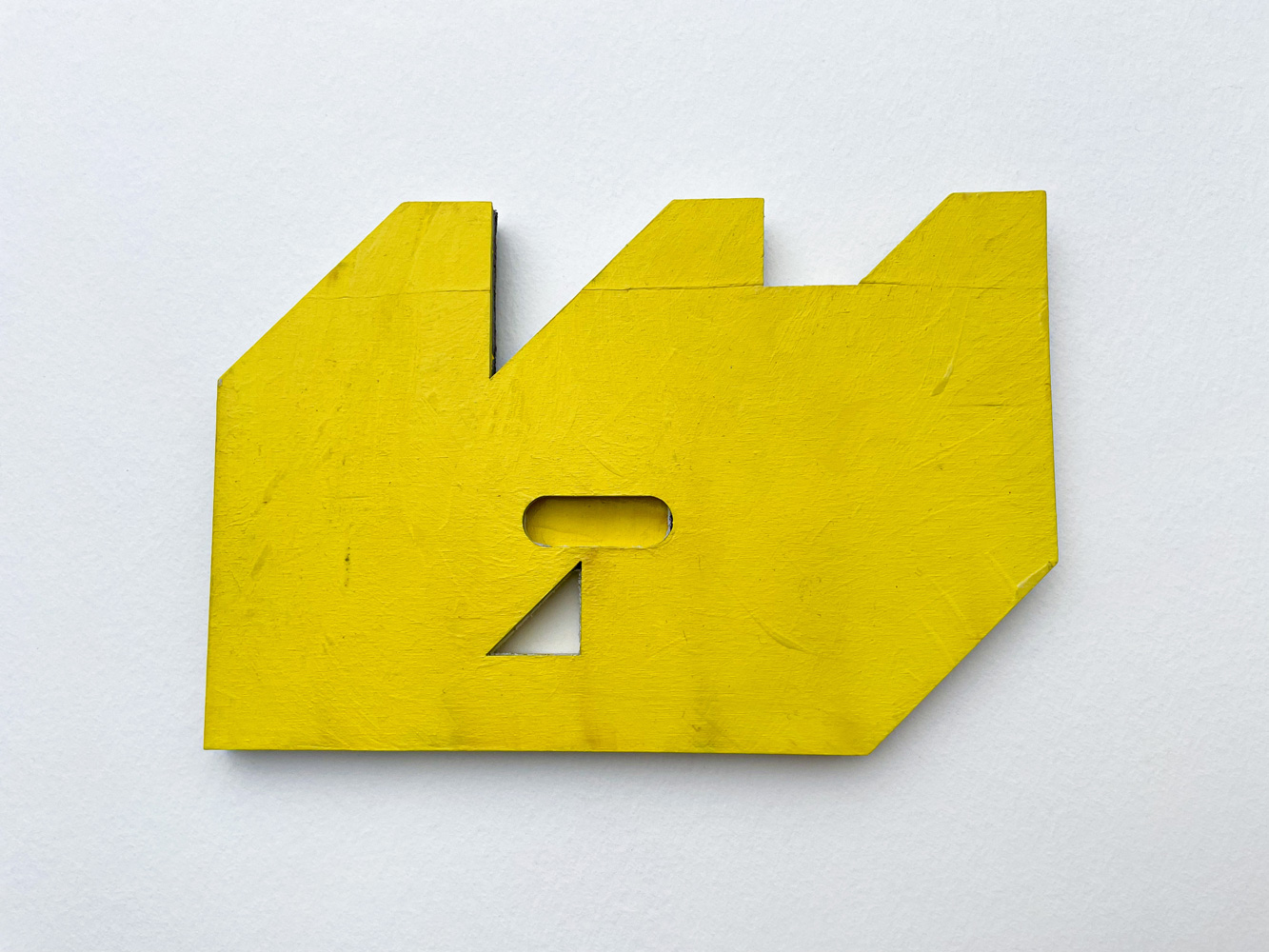
The Pillars of Gediminas is a serious symbol of Lithuanian identity, yet in this work the symbol reveals additional sides of itself, bringing forward qualities that are less common in this context: childlike freedom, playfulness, and spontaneity. This tone relates to the pseudonym Šelmis Plunksnadraskis used by Balys Sruoga, in which the serious literary and theatre theorist chose a light, ironic, and playful identity.

Through contemporary materials and fragments of a child’s drawing, the symbol of Lithuanian identity becomes a marker of memory, a gesture of respect toward an important figure in Lithuanian literature while at the same time remaining a living, evolving symbol that holds seriousness, irony, creativity, and freedom of language and expression.


20x13x1 cm

Acrylic paint, drawing on paper, textile, lacquer on plywood
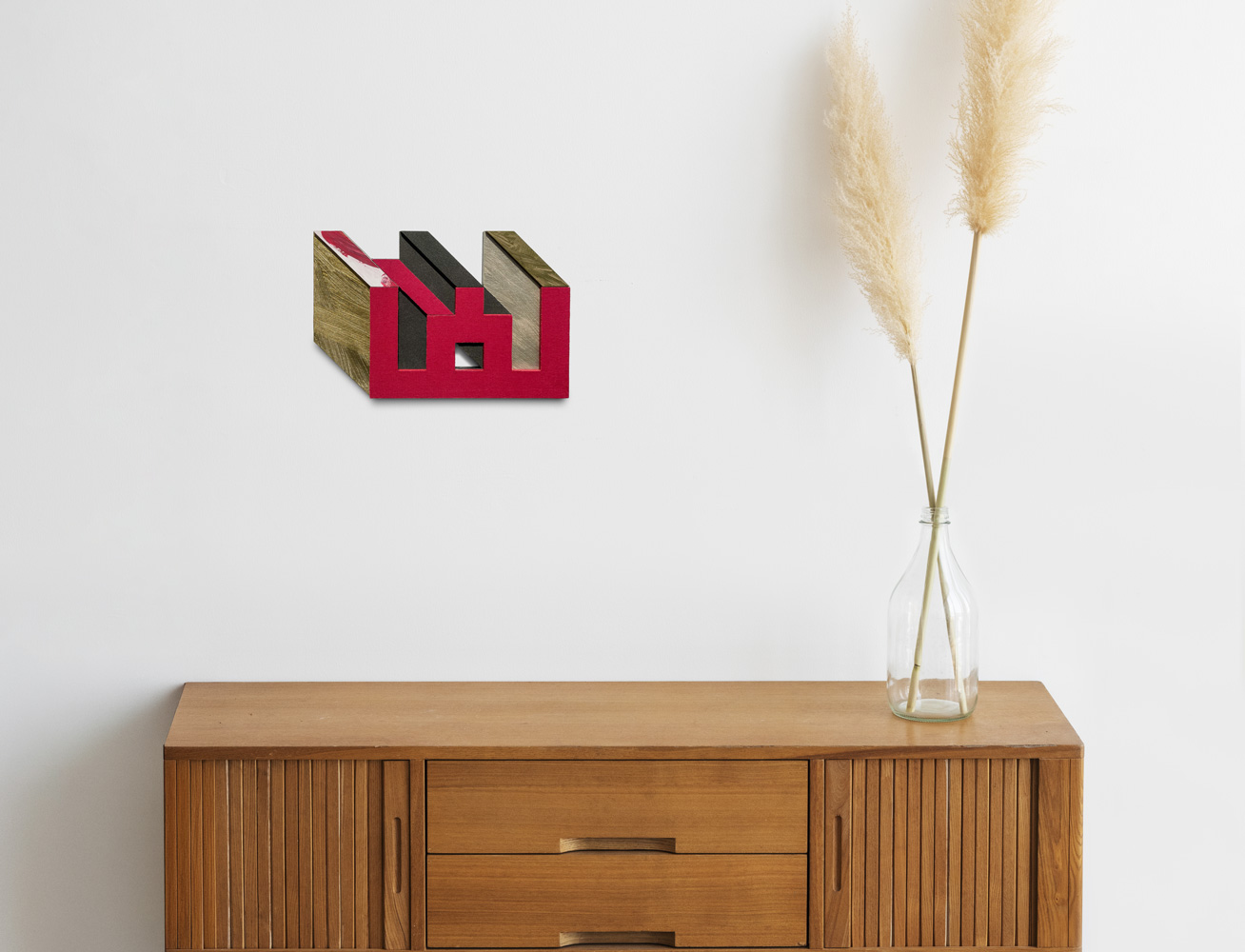


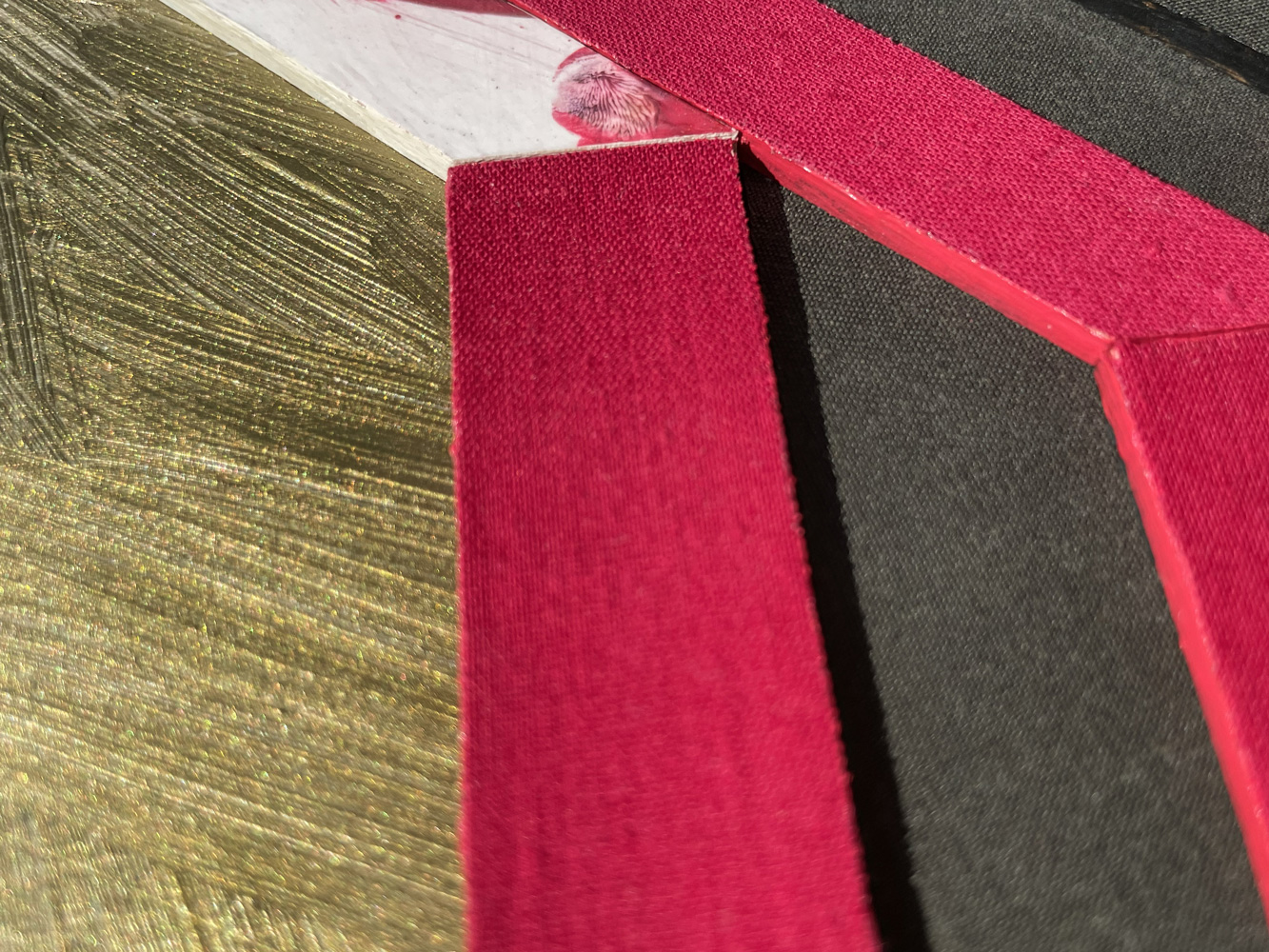
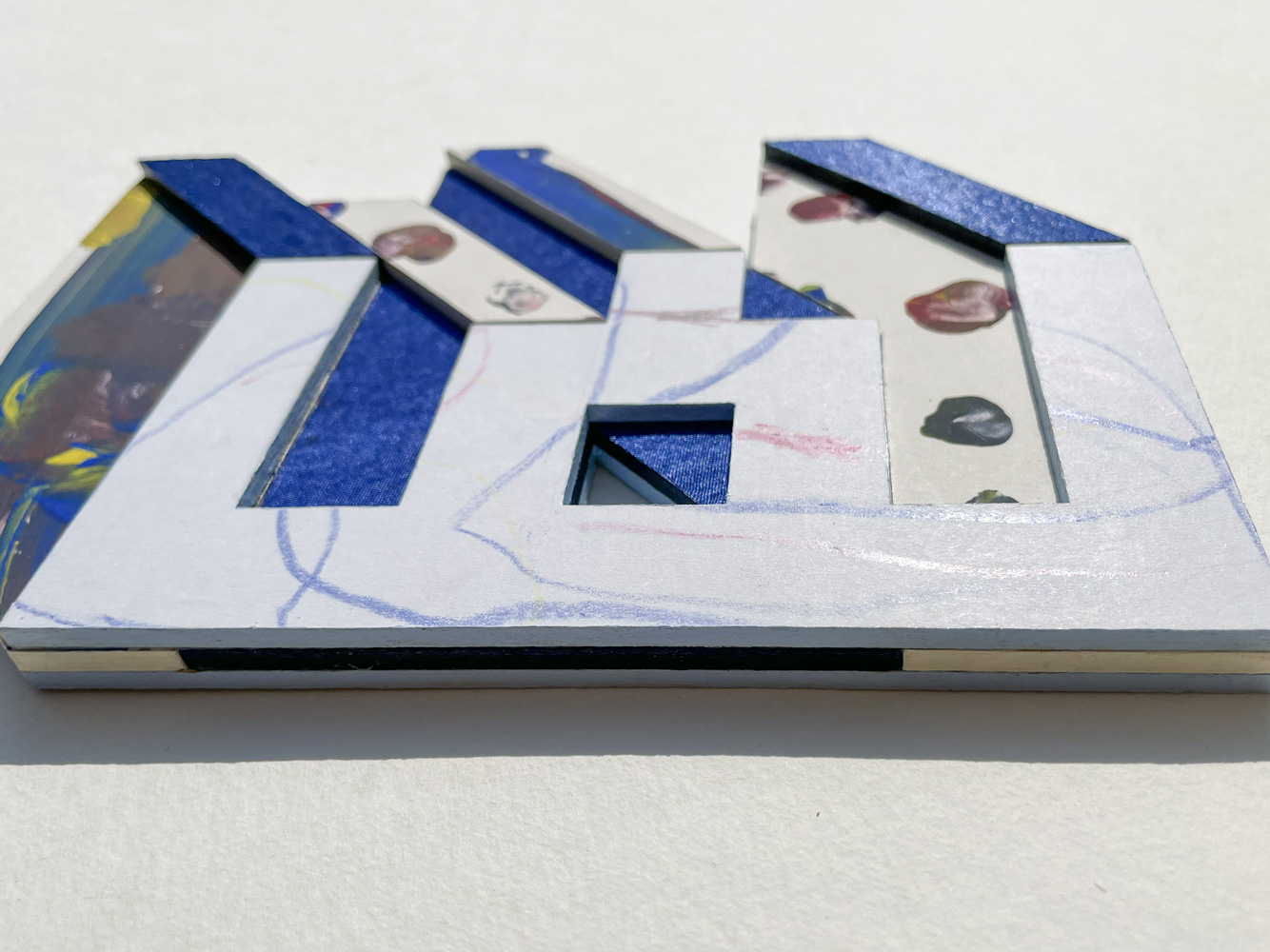
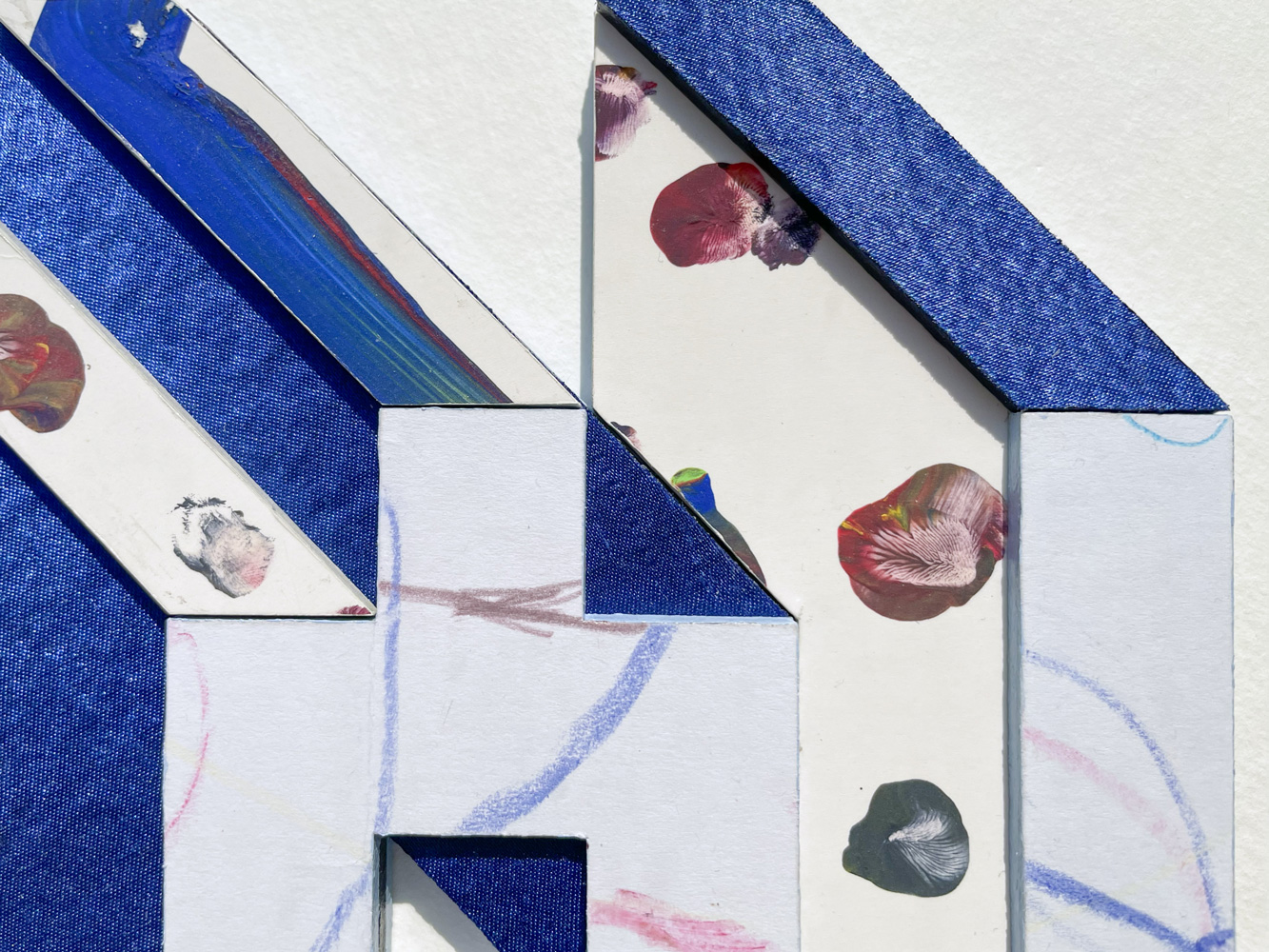
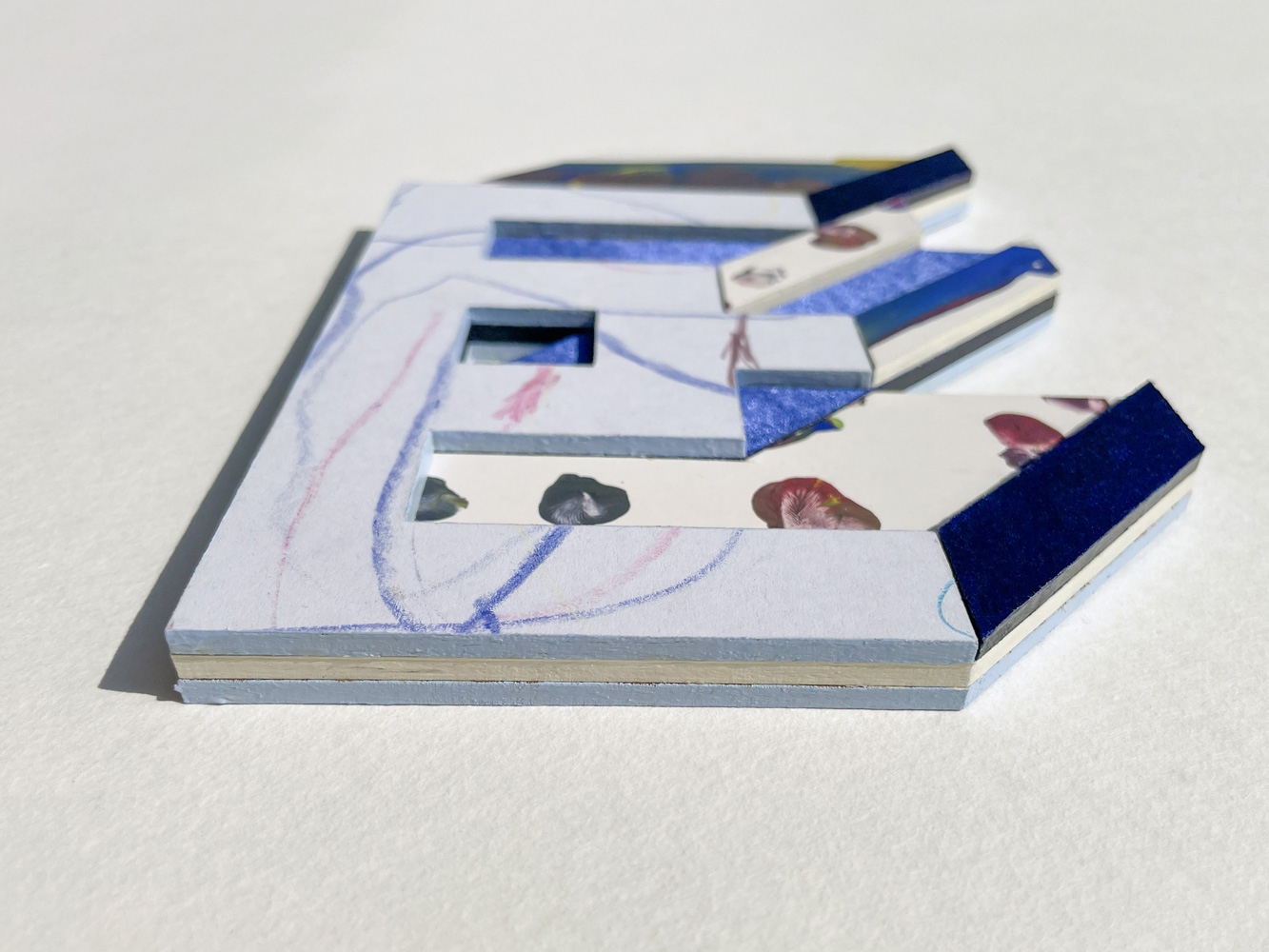
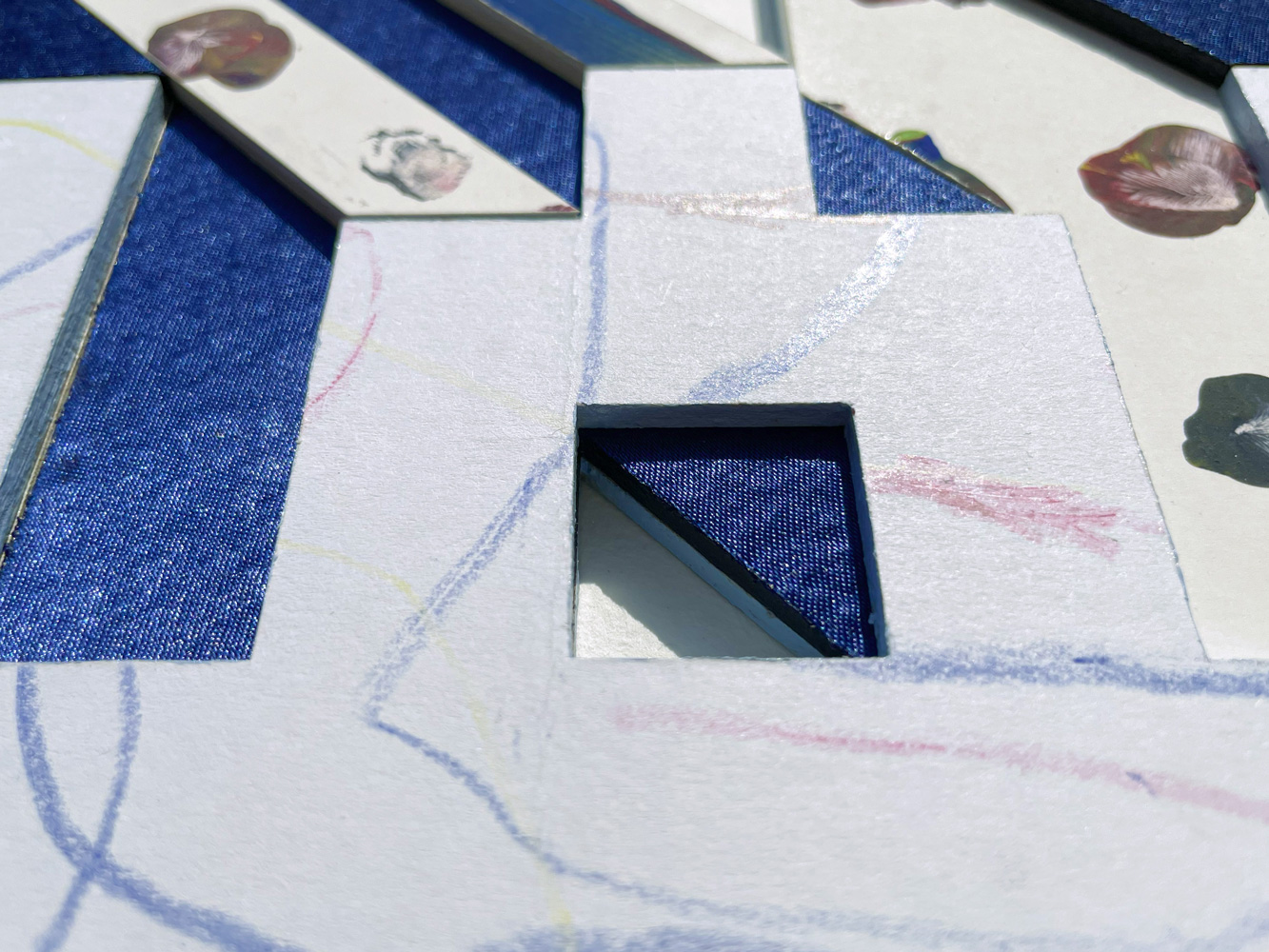
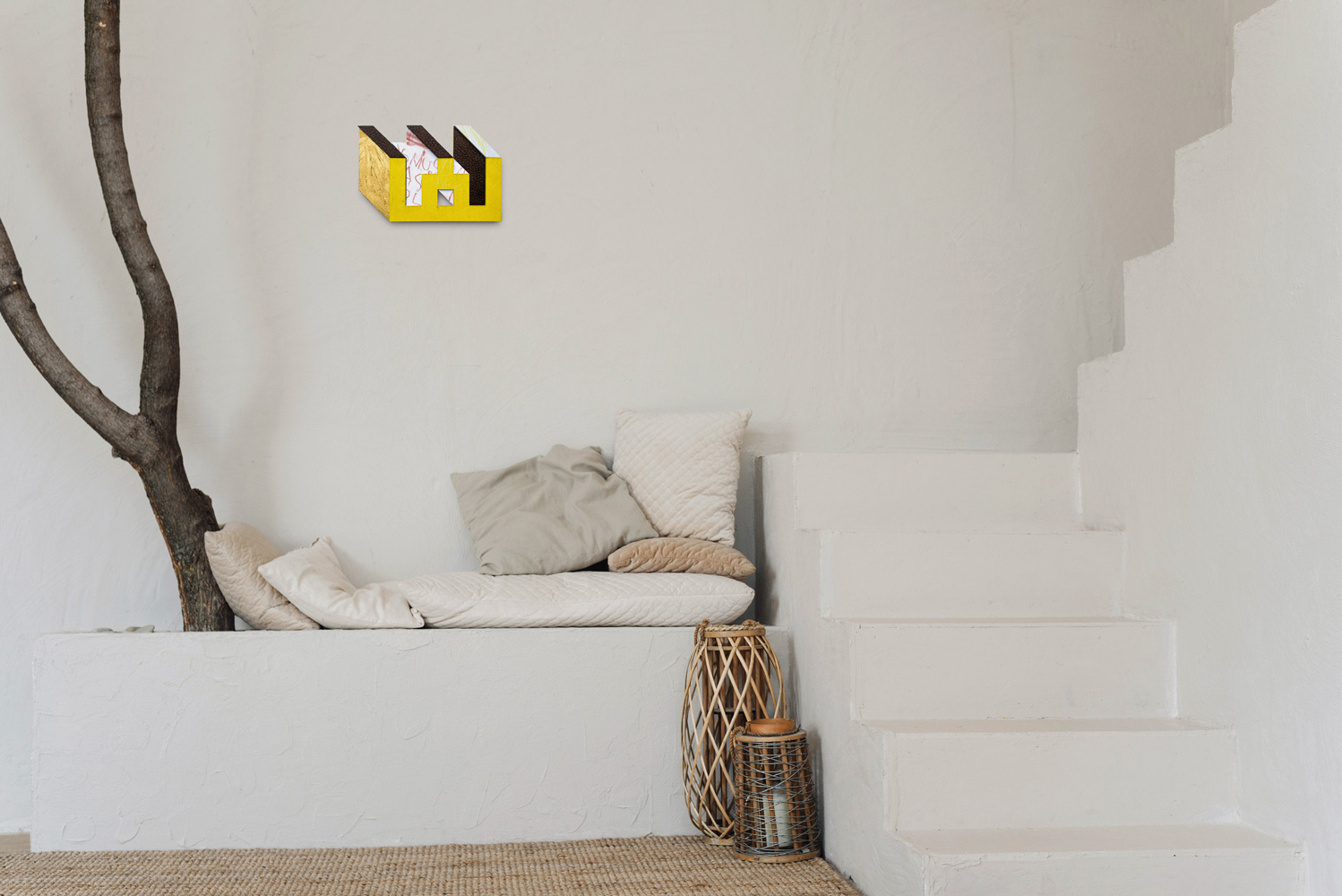
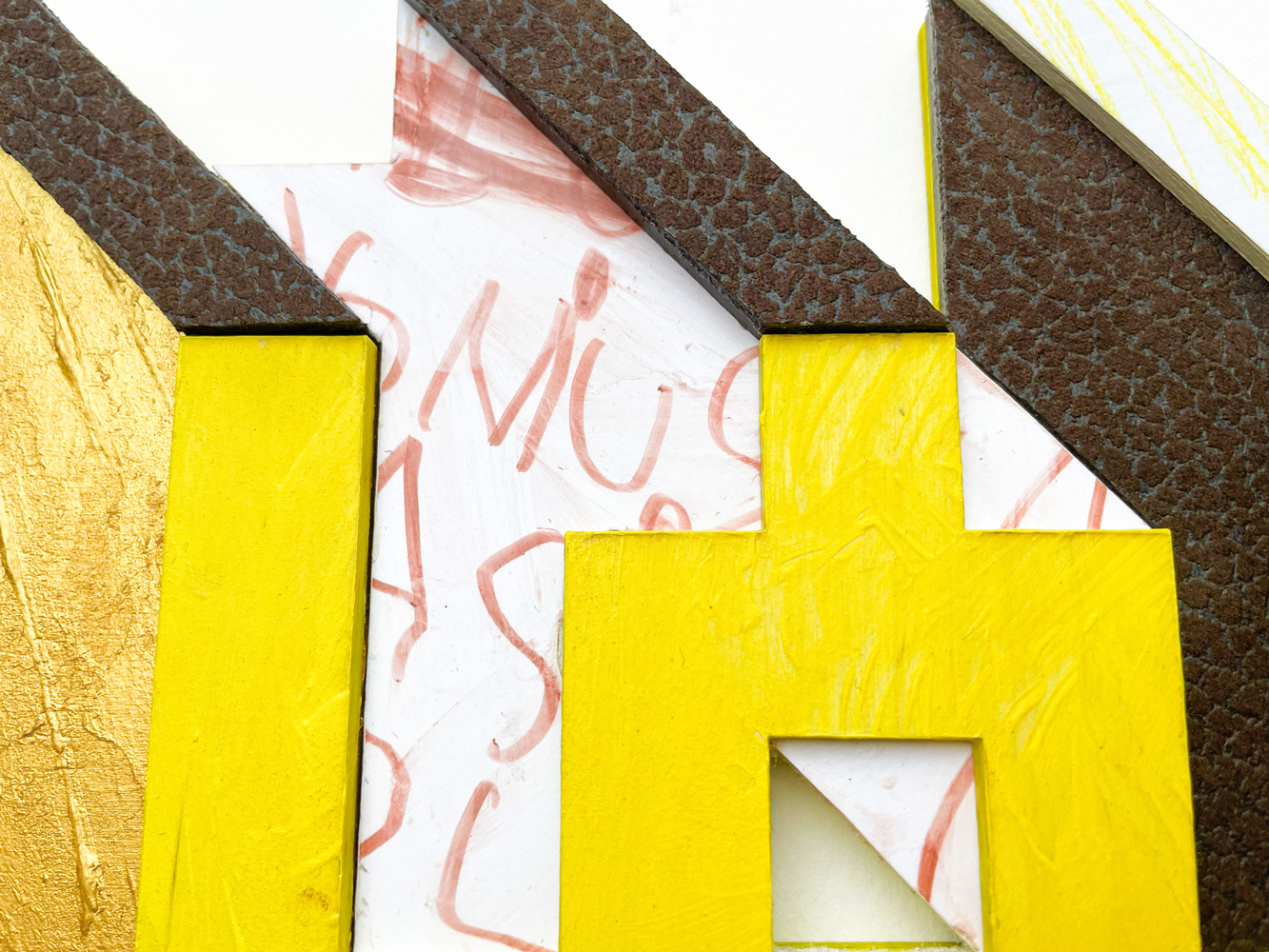
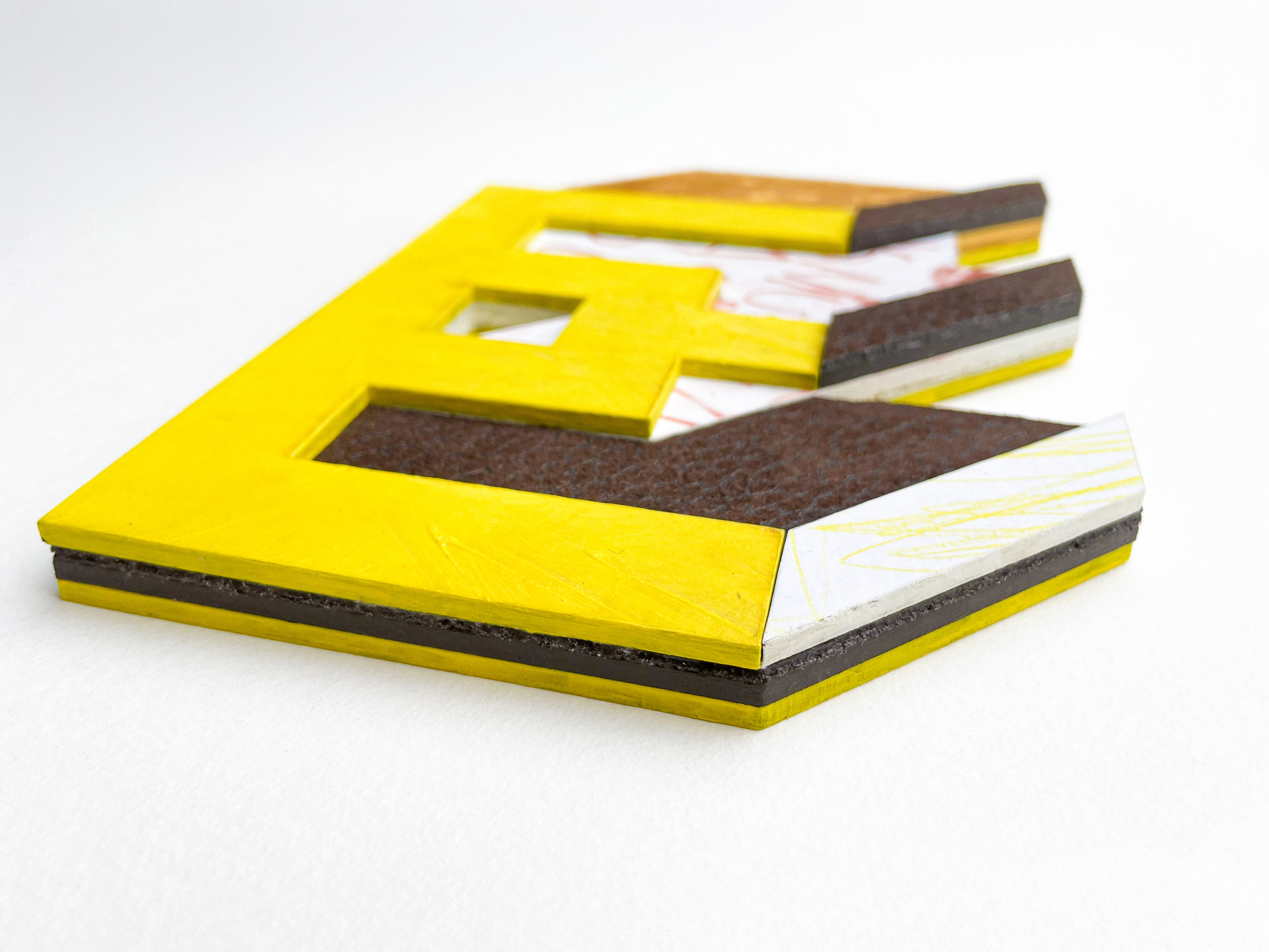
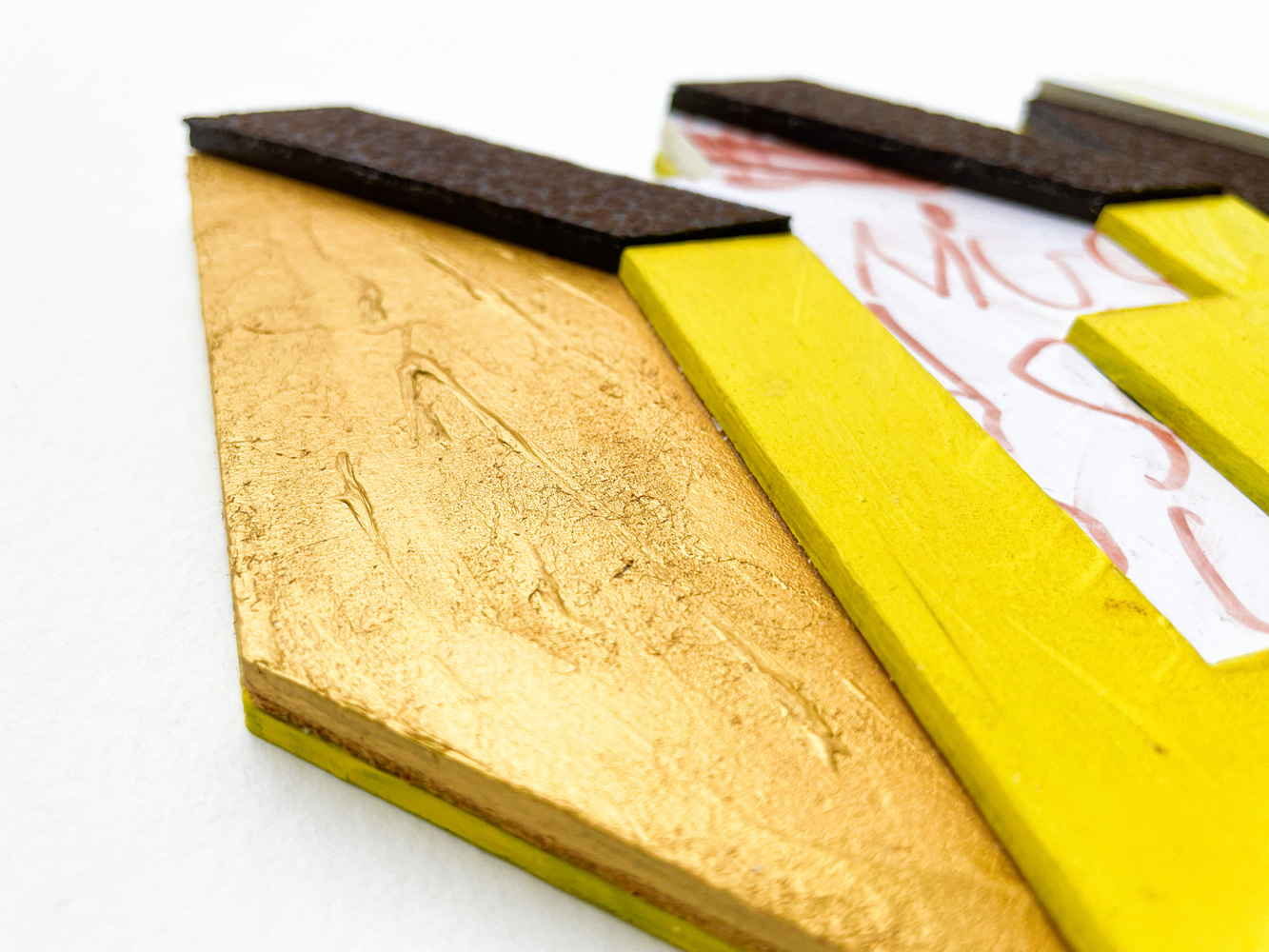
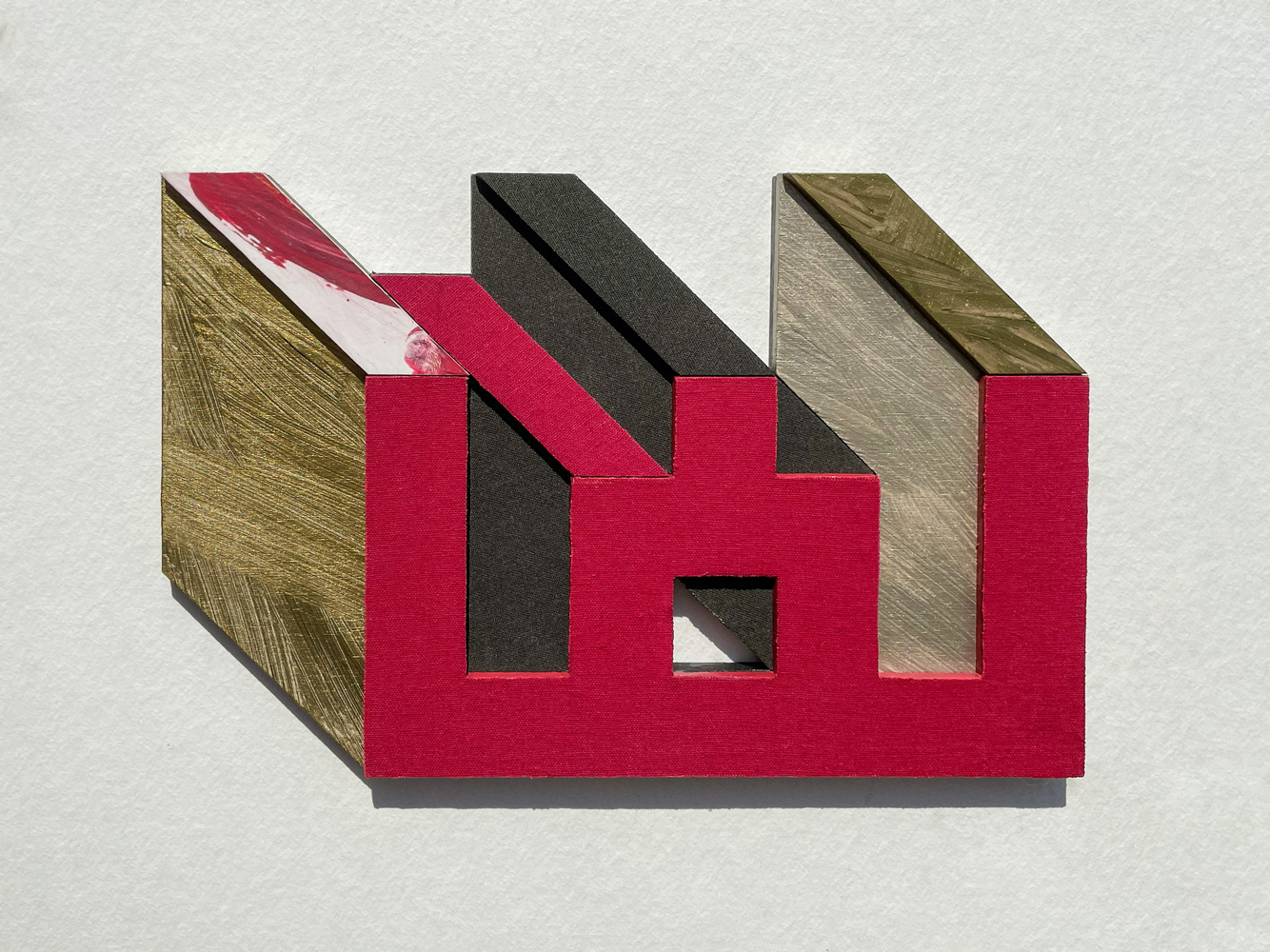
A relief work in which the symbol of the Pillars of Gediminas is formed from layered geometric planes. Different shapes are covered with textiles and glossy paint, and the composition incorporates a small fragment of a child’s drawing, adding a layer of generational memory and shared relevance. The symbol remains recognizable as a sign of Lithuanian identity, yet through material contrasts, surface sheen, and the drawing fragment, it acquires a new, contemporary, and personal resonance.

The color palette and materiality create a restrained yet tense visual presence, in which hints of militaristic coloring can be perceived. This atmosphere is connected to the émigré poet, prose writer, and artist Vytautas Leonas Adamkevičius and his pen name Leonas Lėtas. The work subtly references his fate, experiences, and the historical moment of leaving one’s home to create in a foreign land.


20x13x1 cm

Acrylic paint, drawing on paper, textile, lacquer on plywood


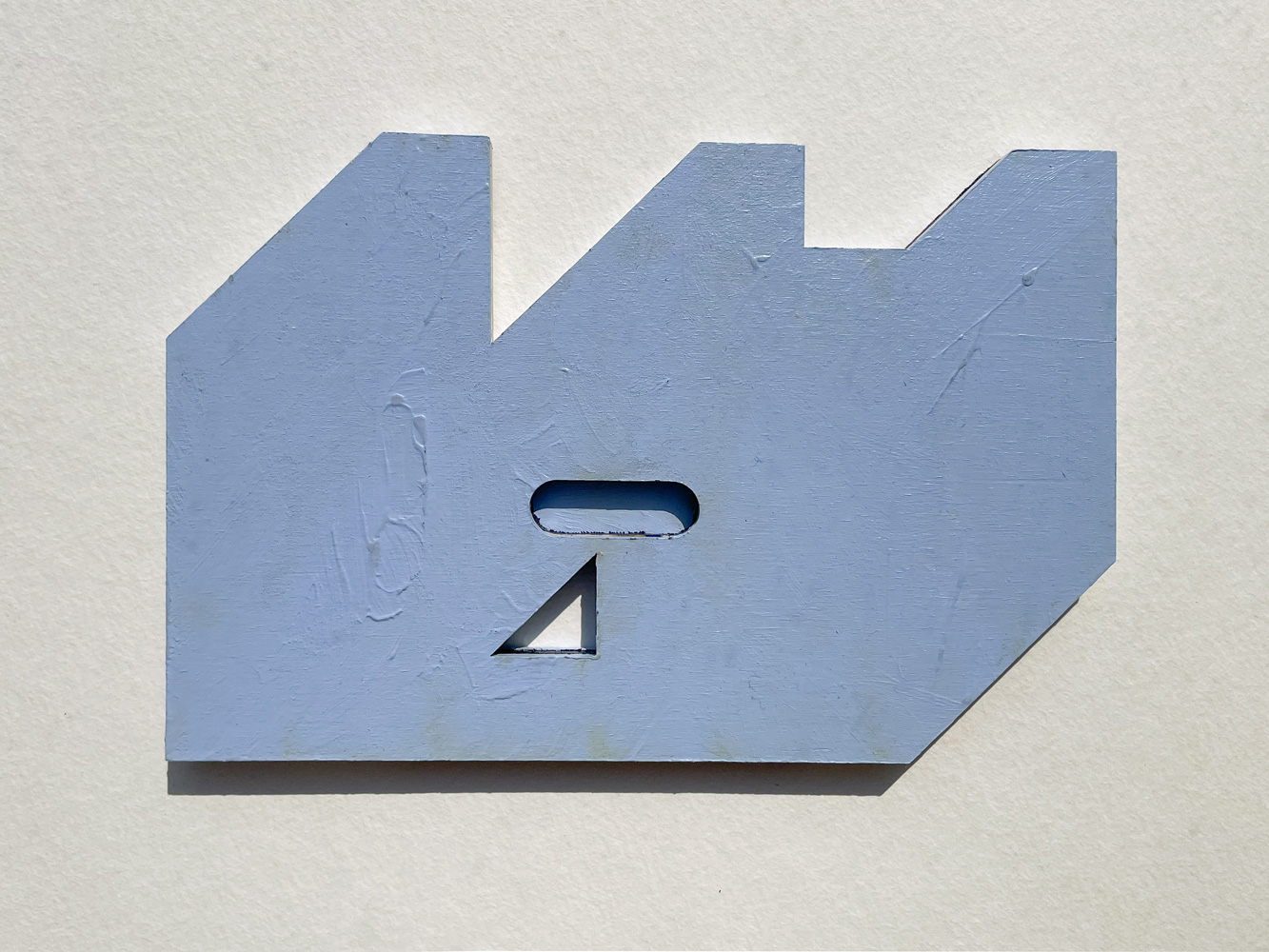
This relief work, created using an original technique, presents the symbol of the Pillars of Gediminas through a layered, three-dimensional composition. The piece is constructed from geometric forms covered with paint, textiles, and fragments of children’s drawings. The combination of different materials and surfaces creates a tactile, living object in which a historical symbol takes on a contemporary, personal form.

The work carries a visual and emotional connection to the night: darker, deeper tones dominate, with shades of blue and muted colors shaping its atmosphere. Night is understood here as the time when owls become active, which links the piece to the pen name Lazdynų Pelėda, used by the writer sisters. In this way, the work pays tribute to nature, silence, and observation – qualities closely associated with both the symbolism of the owl and writers’ literary legacy.


20x13x1 cm

Acrylic paint, drawing fragments on paper, textile, lacquer on plywood